more than a moment
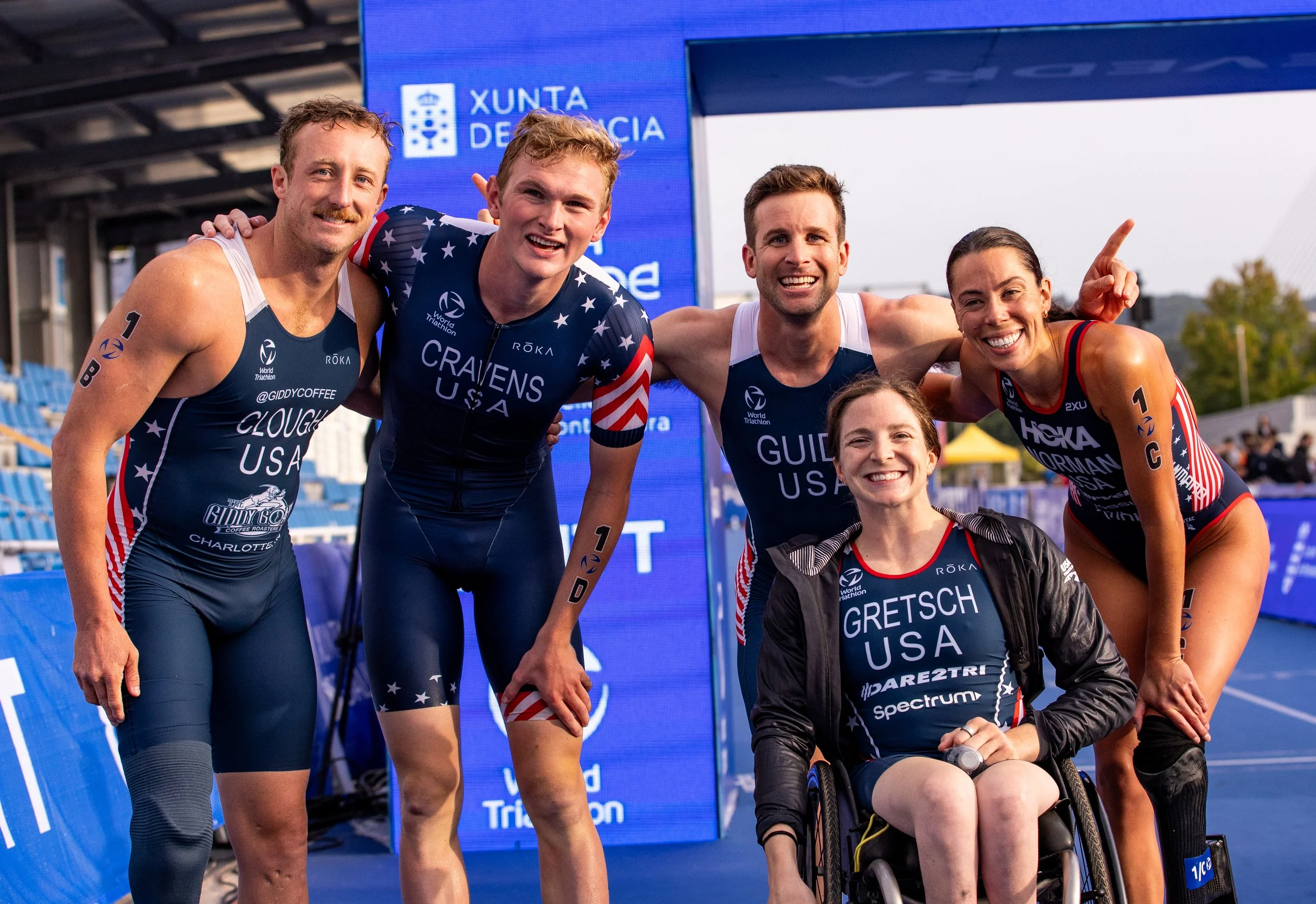
I’ve always been drawn to the way a story can make you feel something before you even realize why.
Sometimes it’s a photograph. Sometimes it’s a color, a video, a moment captured at exactly the right time, or a simple idea that makes you stop scrolling. The individual pieces might look completely different, but when they work together, they create something bigger: a feeling, an identity, a story.
After spending several years working across creative services and social media at USA Triathlon, I’ve started to think about branding and storytelling a little differently.
I used to think about them as separate things.
Branding was the visual side. Storytelling was the content side.
But the more I’ve worked in sports, the more I’ve realized how closely the two are connected.
A brand gives a story somewhere to live. A story gives a brand something worth remembering.
In the Olympic and Paralympic Movement, where athletes and their journeys are at the center of everything, that connection matters.
A Brand Is More Than What It Looks Like
Working at USA Triathlon has given me the opportunity to see just how many places a brand has to exist.
It isn't just a logo on a website.
It’s on an athlete's uniform. It’s on an event backdrop. It’s in a medal. It’s on a finish-line gantry. It’s on social media. It’s in a magazine. It’s in a campaign. It’s part of how an athlete experiences an event and how a fan experiences it from their phone.
Every one of those touchpoints tells you something about the organization.
That has changed the way I think about design.
When I’m creating something, I’m not just asking whether it looks good. I’m thinking about whether it feels like the organization it represents. Does it feel connected to everything else? Does it communicate the right energy? Does it give the audience an immediate sense of who they’re looking at?
Those questions become even more important when you're working across an organization with so many different audiences from elite athletes and age-group athletes to fans and supporters.
The brand has to be flexible enough to speak to all of them while still feeling like the same organization.
USA TRI Showed Me the Importance of Identity
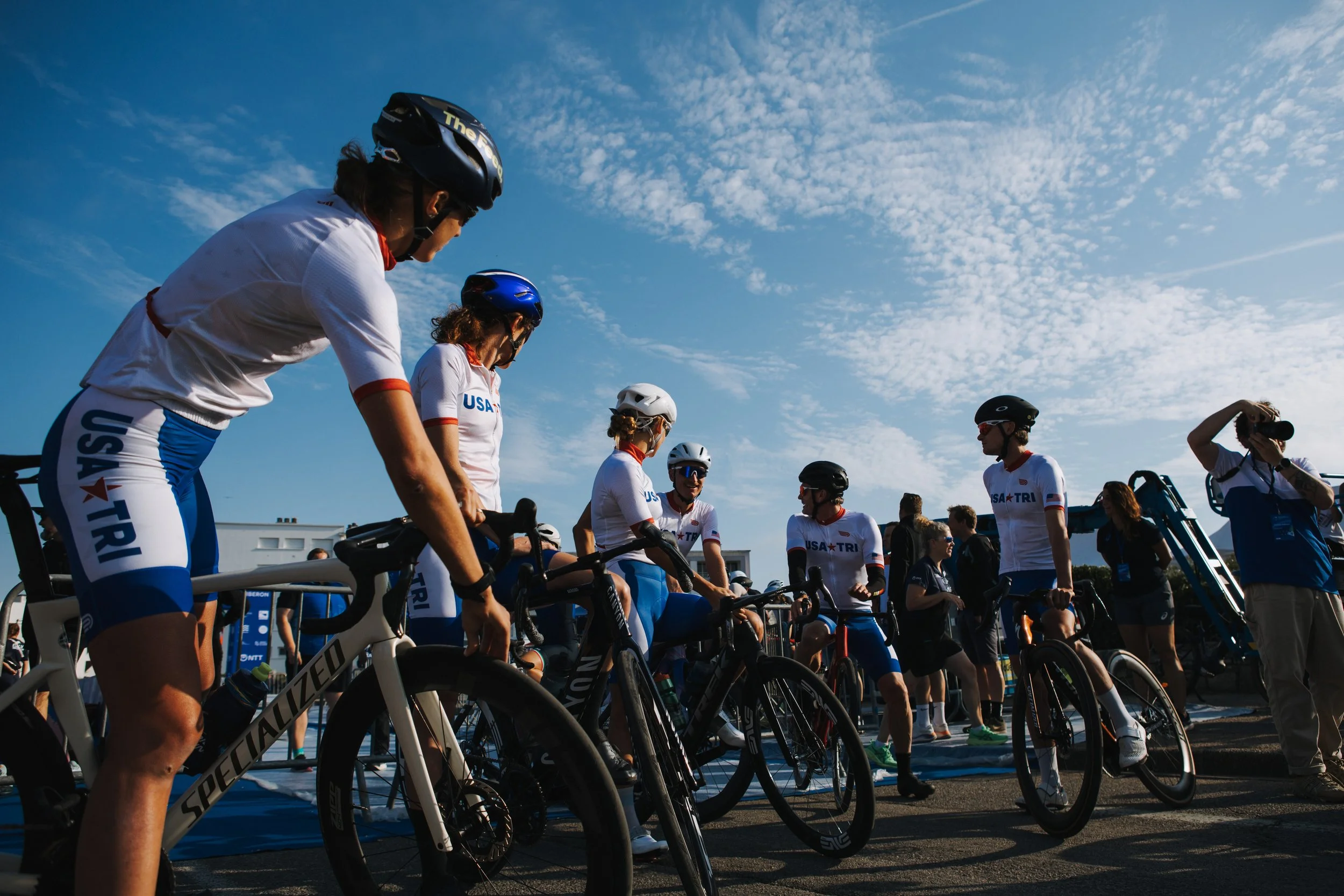
One of the clearest examples of this in my own work has been the evolution of USA TRI.
As USA Triathlon has put more focus on its elite athletes and programs, there has been an opportunity to create a more distinct identity around that side of the organization.
The goal isn't simply to give a team a new look.
It's about creating an identity that gives our Junior, Development, and National Teams their own space while still connecting them to the larger USA Triathlon brand and the broader Olympic and Paralympic pathway.
That meant thinking about how the identity could translate across very different formats and experiences, while still feeling cohesive whether someone encountered it on their phone, on an athlete’s apparel, or at an event.
That process has reinforced something I believe strongly about branding:
A brand isn't one thing you create. It's a system you build.
That system becomes especially powerful when it gives people something they can recognize and feel connected to.
The Story Is Bigger Than the Result
The other side of my work has been storytelling.
Working in social media, especially around major competitions, it can be easy to fall into a rhythm of start lists, results, podium photos, and race recaps.
Those things are important. People need to know what happened.
But I’ve learned that what happened isn't always the most interesting part of the story.
An athlete finishing a race is one moment.
The journey that brought them there is the story.
My work has taken me from telling stories around National Championships and World Triathlon events to following the athletes and journeys that lead to the Olympic and Paralympic Games.
The more I do this work, the more I find myself looking beyond the result.
Who is this athlete?
What does this moment mean to them?
What did it take to get here?
What don't people watching from home get to see?
Those questions have shaped the way I approach social storytelling.
We still told the competition story from start lists to race day moments to results, but we also looked for the personality, emotion, and experiences happening around it. The goal was to make the coverage feel less like a feed of race updates and more like a story unfolding throughout the week.
The Moments Between the Big Moments
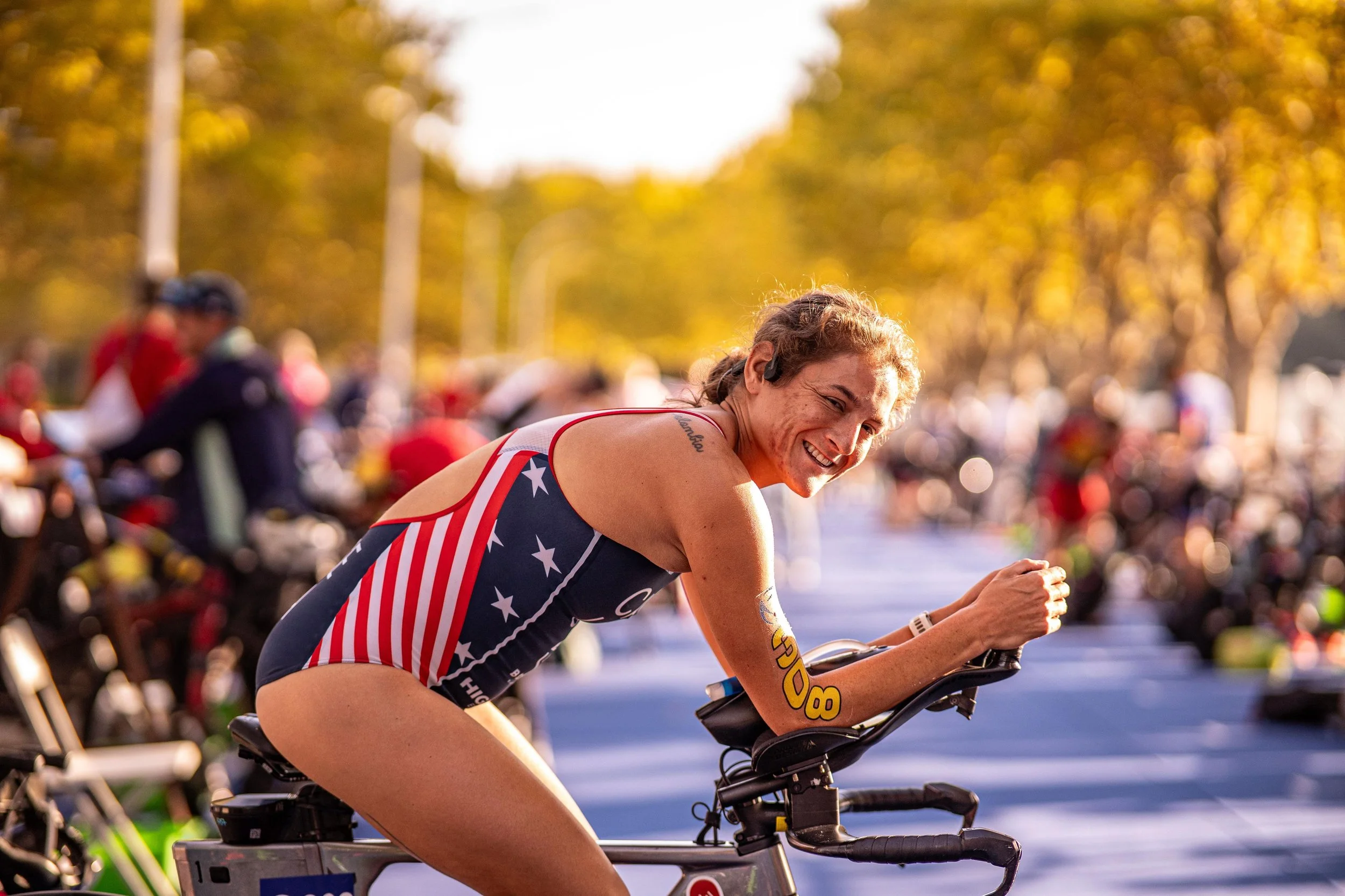
Some of my favorite work has happened in the spaces between the obvious moments.
At a major competition, there is always something happening. Athletes are racing. Photographers and videographers are working. Content is being created. Results are coming in. There are graphics to build and stories to publish.
It would be easy to focus entirely on the competition itself.
But some of the moments I find most meaningful are the ones that happen around it.
An athlete laughing with a teammate.
A coach watching from the side of the course.
A family member reacting from the crowd.
An athlete taking a breath after crossing the finish line.
Someone experiencing a major international competition for the first time.
Those moments help turn a competition into a story.
They remind me that sports storytelling isn't just about documenting what happened. It's about helping people understand what the experience felt like.
Why This Matters in the Olympic & Paralympic Movement
This is where my work with USA Triathlon has made the connection between branding and storytelling feel especially meaningful.
The Olympic and Paralympic Movement is built around competition, but it is also built around people.
Athletes are at the heart of why people connect with the Movement. They are the reason young athletes dream about representing their country someday. They are the reason fans become invested in sports they might not have known anything about. They are the reason a race result can mean something far beyond a number on a screen.
There is a responsibility that comes with telling those stories.
We have an opportunity to show athletes as more than their results.
We can show the person behind the performance.
We can show the journey to the start line, not just the finish.
We can show the personality, the challenges, the relationships, and the moments that make each athlete's story their own.
Good storytelling doesn't just tell people what happened.
It can change how they understand the sport.
Building Something Bigger Than One Post
I think about this a lot when I’m creating content around athletes.
There is always another race or another story to tell. It can be easy to think about each piece of content as its own thing: create it, post it, move on to the next one.
But that’s not really how I see it.
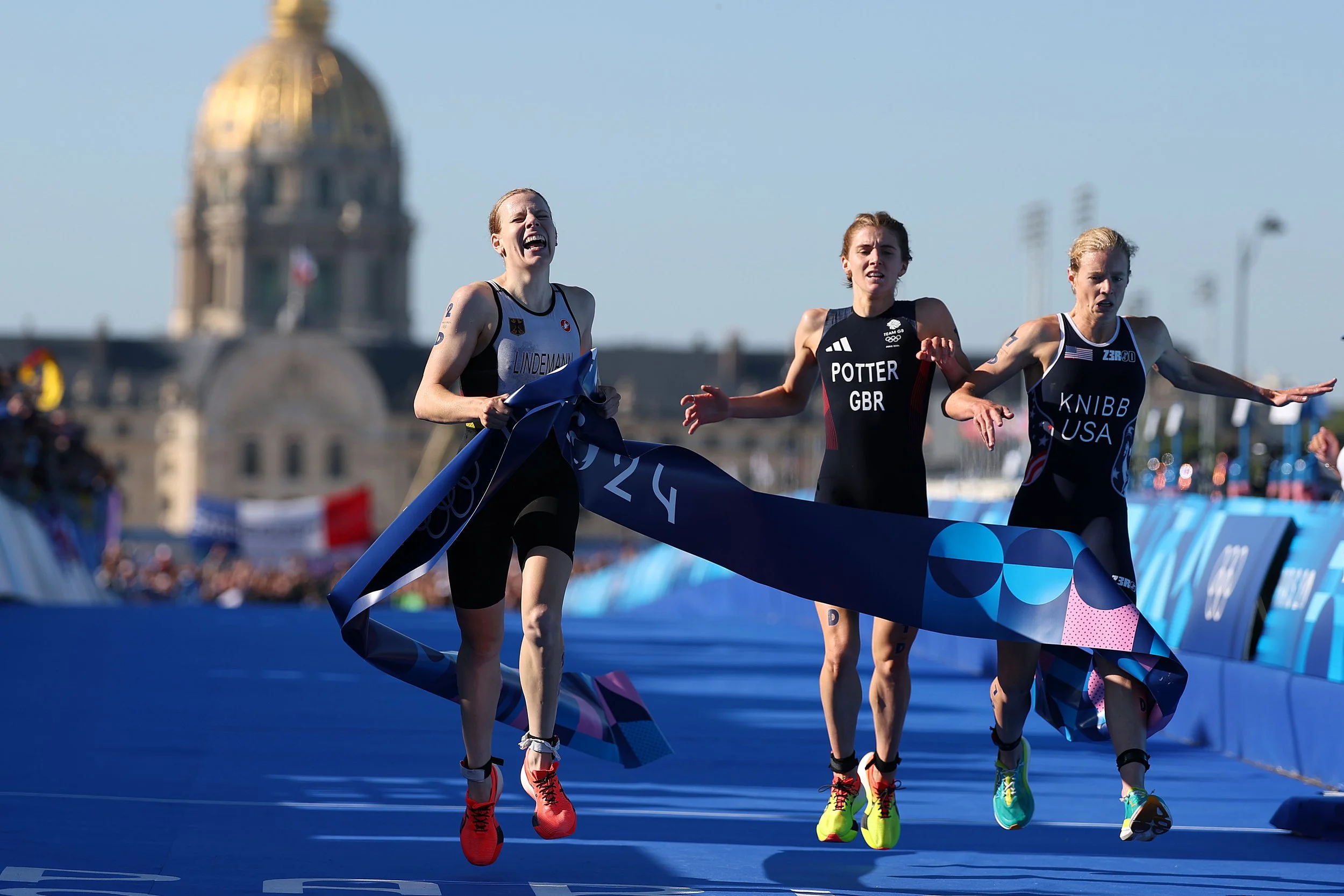
Every photo, video, graphic, and piece of storytelling adds another layer to how an athlete or organization is seen.
Maybe someone discovers an athlete through a race recap. Then they see a training video a few months later. They recognize them again when they make the National Team. Eventually, they’re watching that same athlete compete on the world stage or at the Olympic or Paralympic Games.
Those moments might be separated by months or even years, but they’re connected.
The same is true at USA Triathlon. From National Championships to World Triathlon events to the Olympic and Paralympic stage, each moment is another opportunity to shape how athletes, fans, and the broader community experience the brand.
That’s why I don’t think the goal is simply to make one great post or one great campaign.
It’s about creating work that feels connected to what came before it while helping shape what comes next.
Because the best creative work doesn’t just capture a moment.
It helps give that moment meaning.
What I've Learned
Working at USA Triathlon has taught me that branding and storytelling aren't really separate disciplines.
They're two parts of the same process.
Branding helps people recognize you.
Storytelling helps them understand you.
Branding creates consistency.
Storytelling creates connection.
When they work together, they can make people care.
That's ultimately what I want my creative work to do.
Whether I’m developing a visual identity, capturing an athlete, or crafting a social media post, I’m always asking the same question:
How can we tell this story in a way that feels authentic, feels recognizable, and makes someone want to know more?
Because in sports, there will always be another race.
Another championship. Another podium. Another moment.
The real challenge is creating the stories that make people remember why that moment mattered.
That's what makes the work worth doing.
